
Which kitchen worktop should I choose?
Choosing a kitchen worktop, without the taboos. Not a biased, gushing round-up of where to spend your money, but real help in finding the surface you actually need.
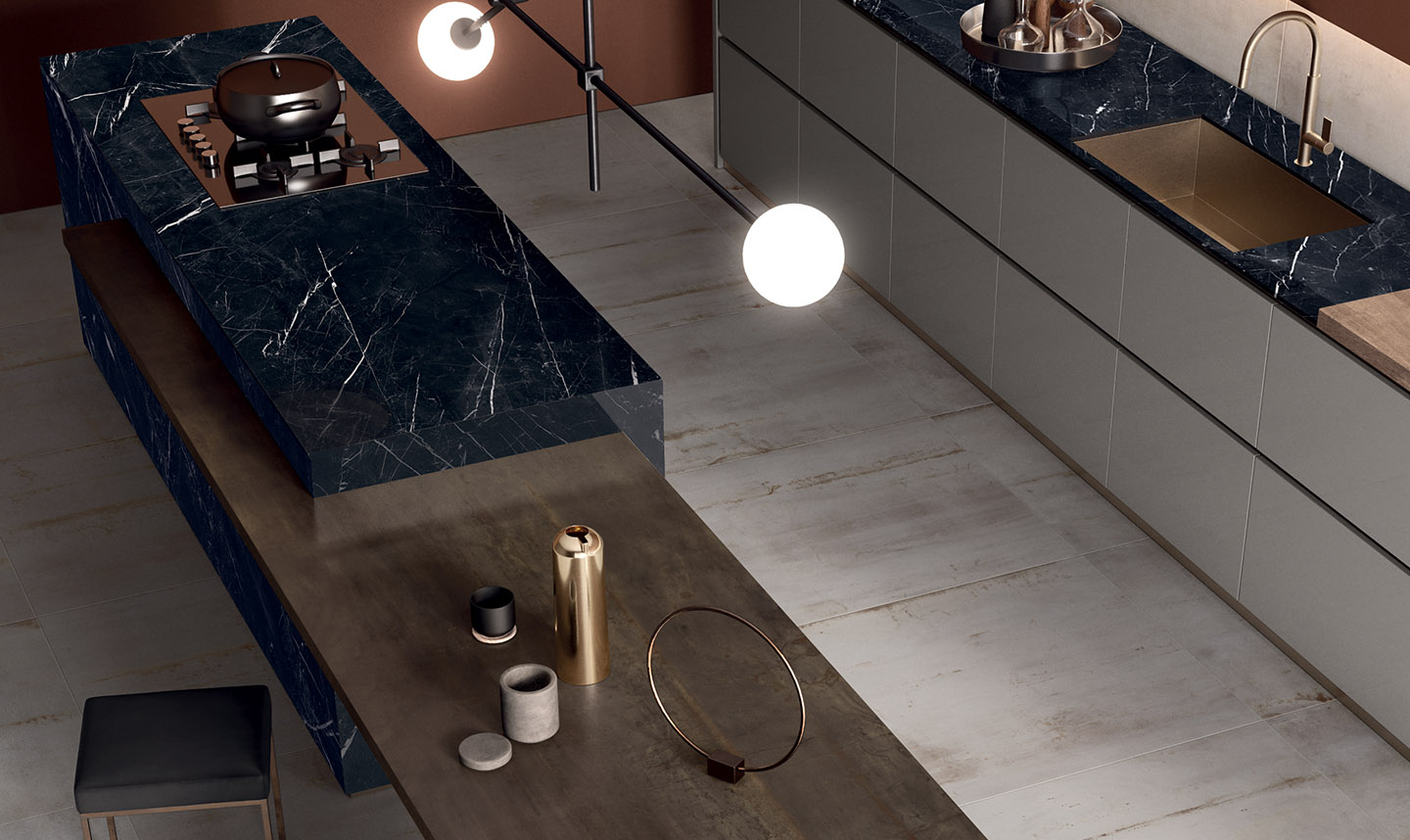
Choosing a kitchen worktop, without the taboos
Choosing the worktop is one of the most important decisions in any kitchen design. It defines the room visually, but it is also in use every single day: we chop on it, cook on it, load it up and wipe it down. Which is exactly why good looks alone are not enough — it has to be functional, hard-wearing and matched to the way you live.
The style is settled, the kitchen is taking shape, and the budget is probably set as well. And then comes the classic question: which kitchen worktop should I choose?
Most people think in two extremes at this point: the cheapest or the best. In reality the ideal solution always sits where your needs, the way the surface is used and value for money meet.
So which is the cheapest worktop and which is the best?
– if only it were that simple
It depends entirely on you. If you want a worktop for life, one you can tenderise meat on or set a hot pan down on as a matter of routine, then quartz or ceramic is the material for you. Someone always says at this point: “we do everything on my mother’s 20-year-old worktop and it still holds up, and it cost a tenth of this.”
The other fact in favour of quartz is that it is exceptionally hygienic. It is easy to clean and nothing works its way into the surface. That makes it a very good choice for families with small children too.
The cheapest is not hard to find. Put up a laminate board instead of a worktop. But as we have all learned by now, the cheapest solution is not always the most cost-effective one.
Which criteria are worth weighing up?
- scratch and wear resistance
- hygiene, porosity
- acid and chemical resistance
- heat and thermal-shock resistance
- mechanical resistance
- ease of cleaning, maintenance
- price and long-term value
If you are planning for extreme use — placing hot pans directly on the surface on a regular basis, for instance — a different material suits you than it would someone who mainly uses the surface for preparation.
Ceramic worktops
The ceramic worktop counts as a relatively new technology, and at the same time an exceptionally advanced solution. It is made from natural raw materials fired at high temperature, which leaves the material extremely resilient.
The advantages of a ceramic worktop:
- outstanding heat and thermal-shock resistance
- high resistance to scratching and cutting
- a non-porous, hygienic surface
- a more environmentally friendly manufacturing process
- an exceptionally varied choice of finishes
Its appearance spans a wide range, from marble through concrete to wood-effect surfaces, so it works beautifully in modern and elegant kitchens alike.
Ultra-compact surfaces — the premium category
Dekton, the “Rolls-Royce” of kitchen worktops (?)
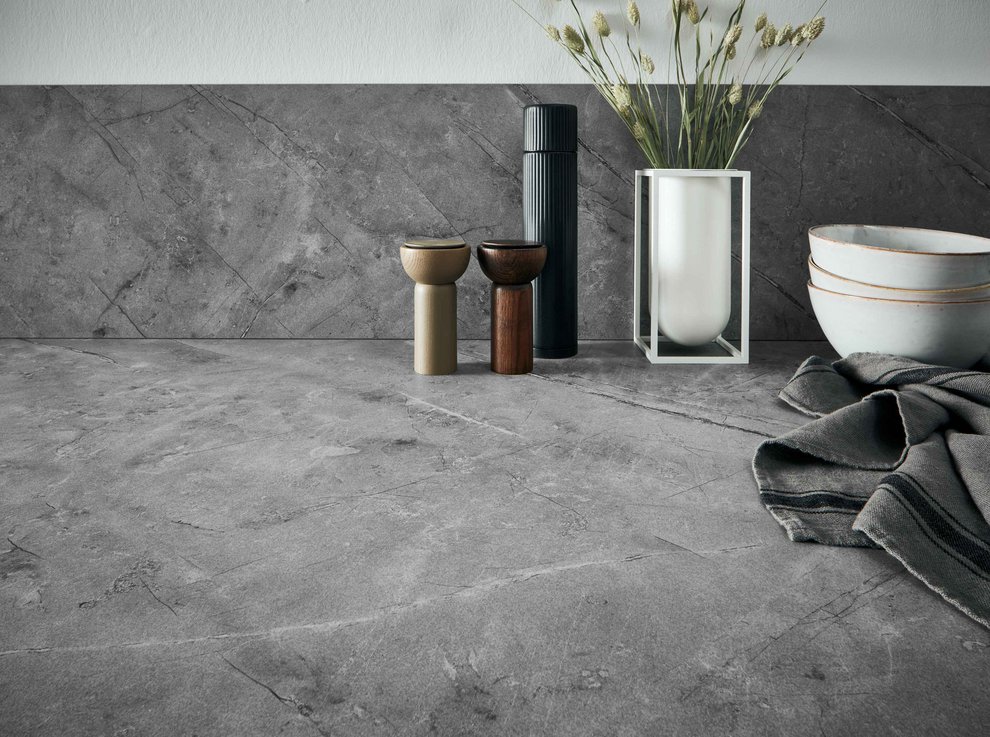
The Dekton ultra-compact surface made by Cosentino is one of the toughest options available today. It is produced from quartz, ceramic and glass components under extremely high pressure.
Dekton is the product of a Spanish quartz worktop manufacturer, Cosentino. If you are looking for the best, most hard-wearing worktop there is, you have found it. The colour range is very good as well, with genuinely refined finishes.
Story: one of our clients, who did in the end order a Dekton worktop, asked to be allowed to strike a slim 8 mm sample with the sharp side of a meat tenderiser. Needless to say, it split apart on the second blow. There is a considerable difference between 8 mm and 2 cm material. Even so, nobody should assume this worktop is indestructible.
It is an astonishingly beautiful and very good material. If you want genuine luxury and a solution that will last a lifetime, you have found it.
Ceramic worktops with an enormous choice
But the whole truth is that there are excellent alternatives and beautiful ceramic worktops available.
One of the most popular among our clients is the Italian ceramic Materia: materiaslab.com. Or the Atlas Plan products, also available through Multistone: multistone.hu/atlas-plan.
With our clients we look at the finishes, the colours and the overall concept first, and only then do we go into the differences between the brands. What matters most, after all, is which finish will be right in that particular room.
Materia worktops
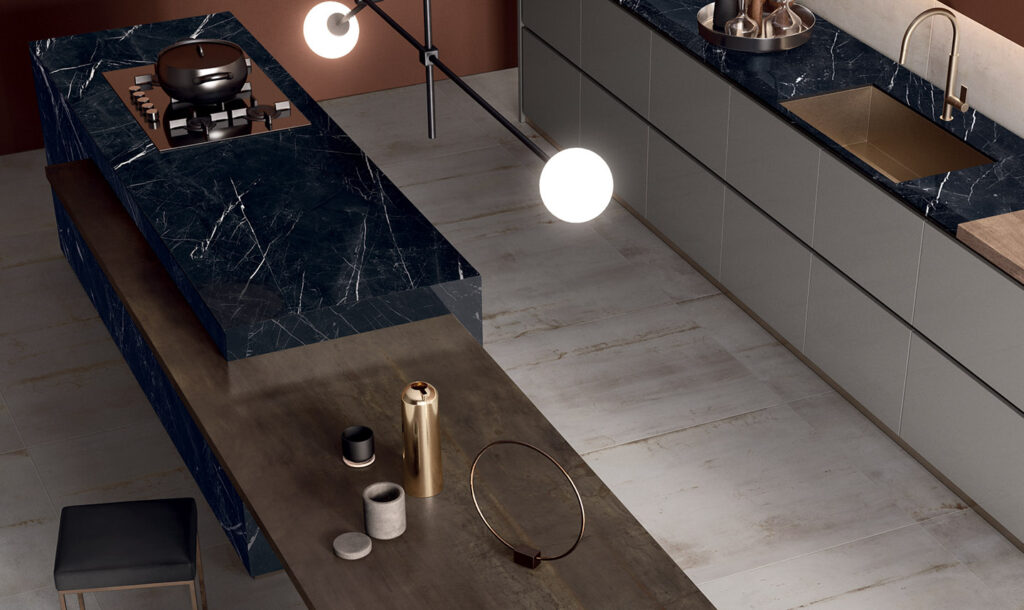
Materia is made by an Italian manufacturer and offers a strikingly beautiful range of finishes with mature, high-quality surfaces. Its material composition and properties rival those of Dekton, while its pricing is roughly 30% more favourable.
They also brought a real innovation to the market back in the early 2020s: the cooking zones of the hob are built into the ceramic worktop itself. It has its drawbacks alongside its advantages, but there is no denying it is a very smart solution.
Quartz composite worktops
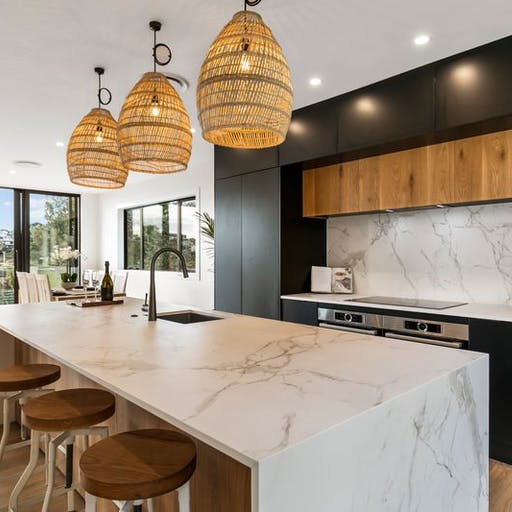
Quartz composite worktops combine the appearance of natural stone with modern technology. They typically contain 70–95% natural mineral content, supplemented with binders and pigments.
Its advantages:
- non-porous, hygienic
- scratch- and wear-resistant
- a wide choice of colours and surfaces
- easy to clean
Well-known manufacturers:
- Silestone — Cosentino’s quartz collection
- Technistone — an alternative with good value for money
Quartz stone feels and looks almost identical to natural stone, carries every one of its advantages, and in a few respects may even surpass it.
Compact worktops
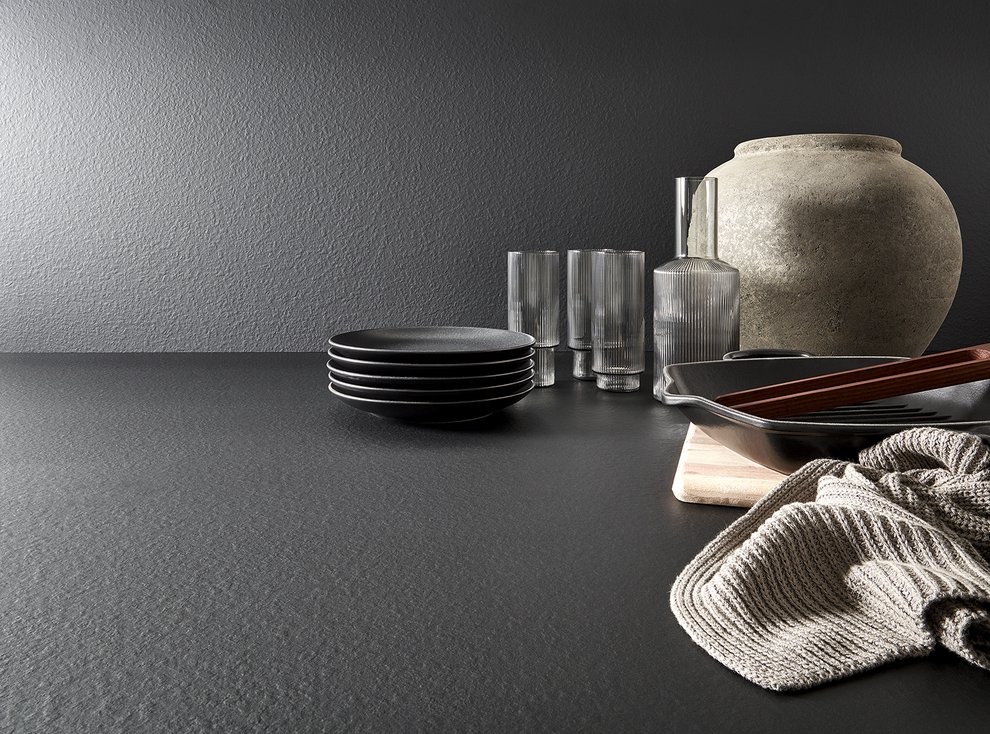
Compact laminate is a high-quality, high-pressure laminate material that stands up particularly well to intensive use. A hard exterior with a stylish interior. Compact wins over lovers of design and admirers of robust materials in equal measure.
Its advantages:
- completely waterproof
- scratch- and impact-resistant
- a slim, modern appearance
- fingerprint-resistant surfaces
In heavily used kitchens it can be an excellent alternative to the conventional laminate worktop.
Mineral-based worktops
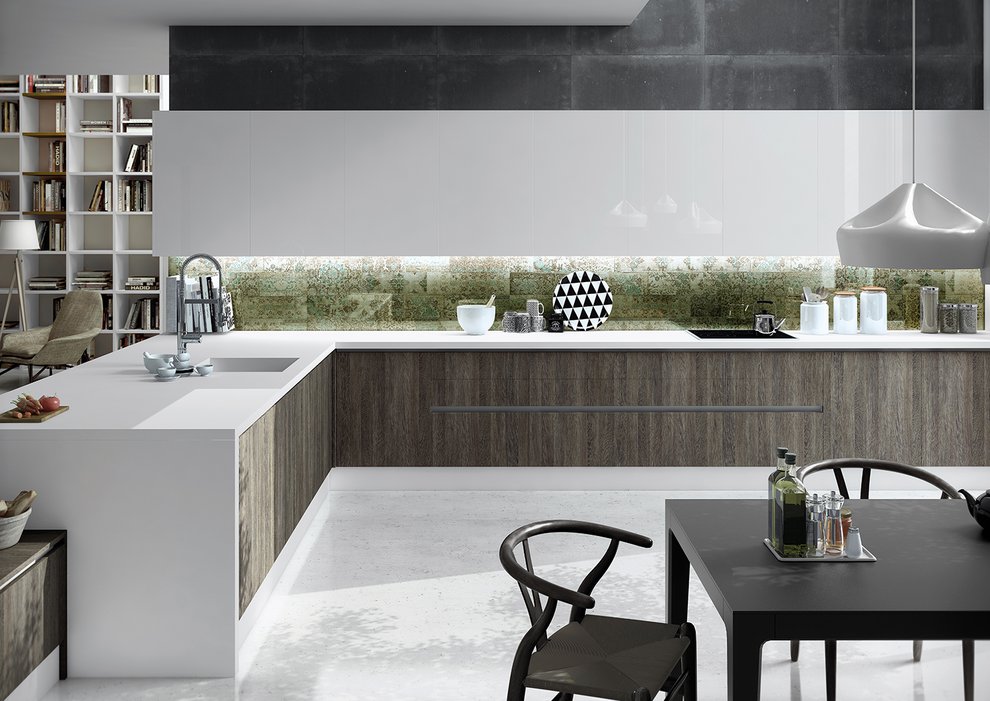
Mineral-based worktops have a homogeneous, non-porous surface. What makes the material special is that it can be joined seamlessly, so sinks and longer runs of worktop can read as a single continuous surface.
Its advantages:
- easily shaped
- hygienic, food-safe
- a repairable surface
- a silky feel
Natural stone worktops
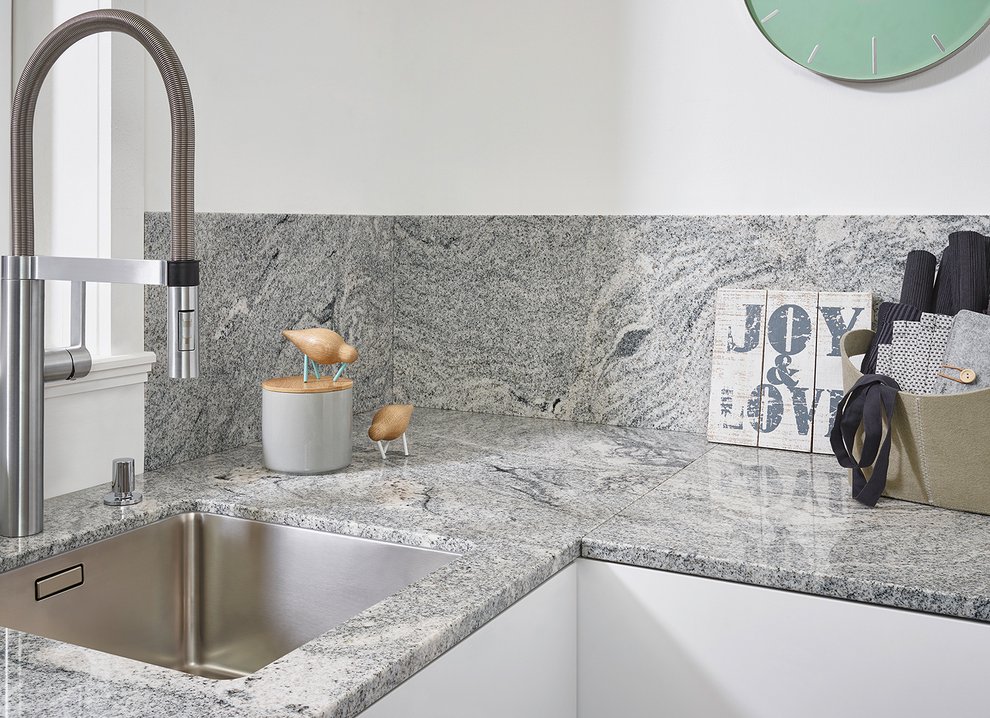
Natural stone — granite or marble, for instance — is unique in every single case. No two slabs are entirely alike. Each piece is an individual formed within the Earth, with many millions of years of story to tell.
- exceptionally durable
- a natural, enduring appearance
- a factory-sealed surface
- an elegant, premium effect
Solid timber worktops
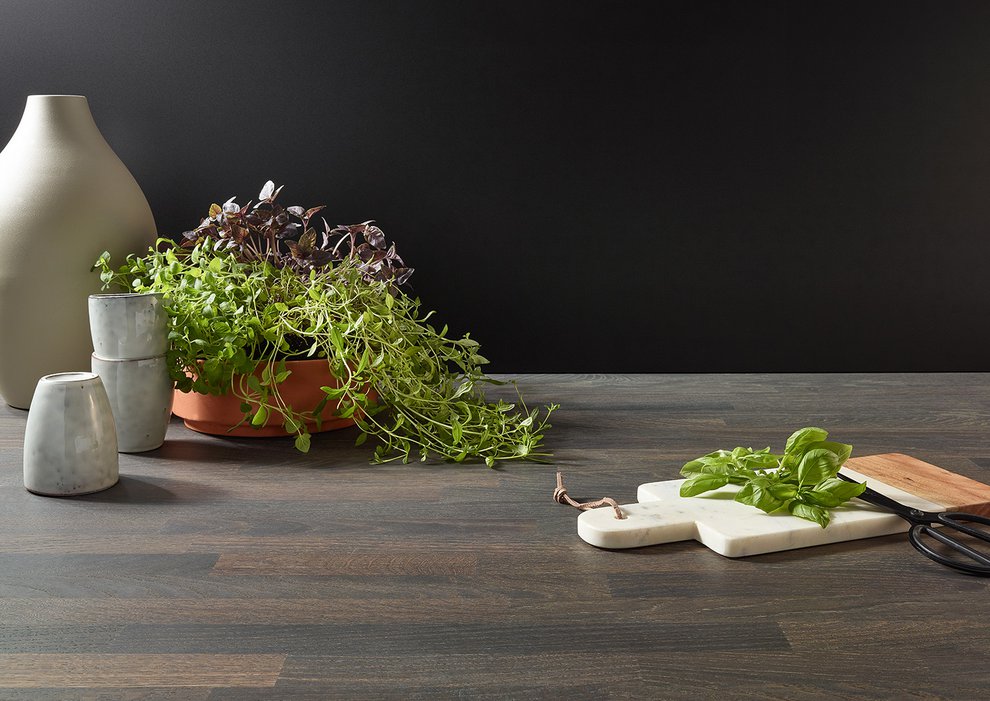
A solid timber worktop creates a warm, homely atmosphere, though it is worth knowing that it asks for more care than stone or composite surfaces. Every piece is unique, and it took long years to acquire its own grain.
Its advantages:
- a natural, one-of-a-kind grain
- a pleasant feel
- works well in rustic and modern rooms alike
Laminate worktops
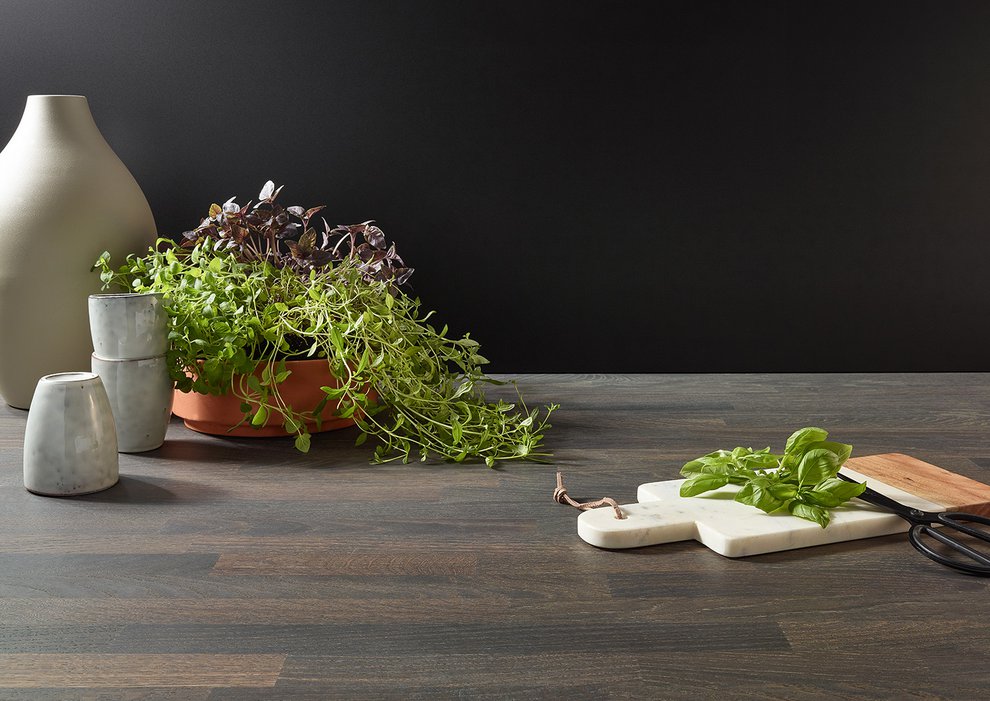
The laminate worktop is among the most cost-effective options, and with today’s technology a surprisingly good quality is now achievable.
Its advantages
- a wide choice of finishes
- easy to clean
- durable with proper water protection
- a favourable price
It is not a premium material, but it can be a good compromise if value for money is the main consideration.
In summary
There is no universally “best” kitchen worktop — only the solution that fits your particular circumstances most closely. To choose the right material, it is worth thinking through how the kitchen is actually used, what maintenance you are willing to take on, and the budget.