
More storage at home: smart solutions for 2026
Smart ways to gain storage at home: multifunctional furniture, vertical thinking and considered planning that make every centimetre count.
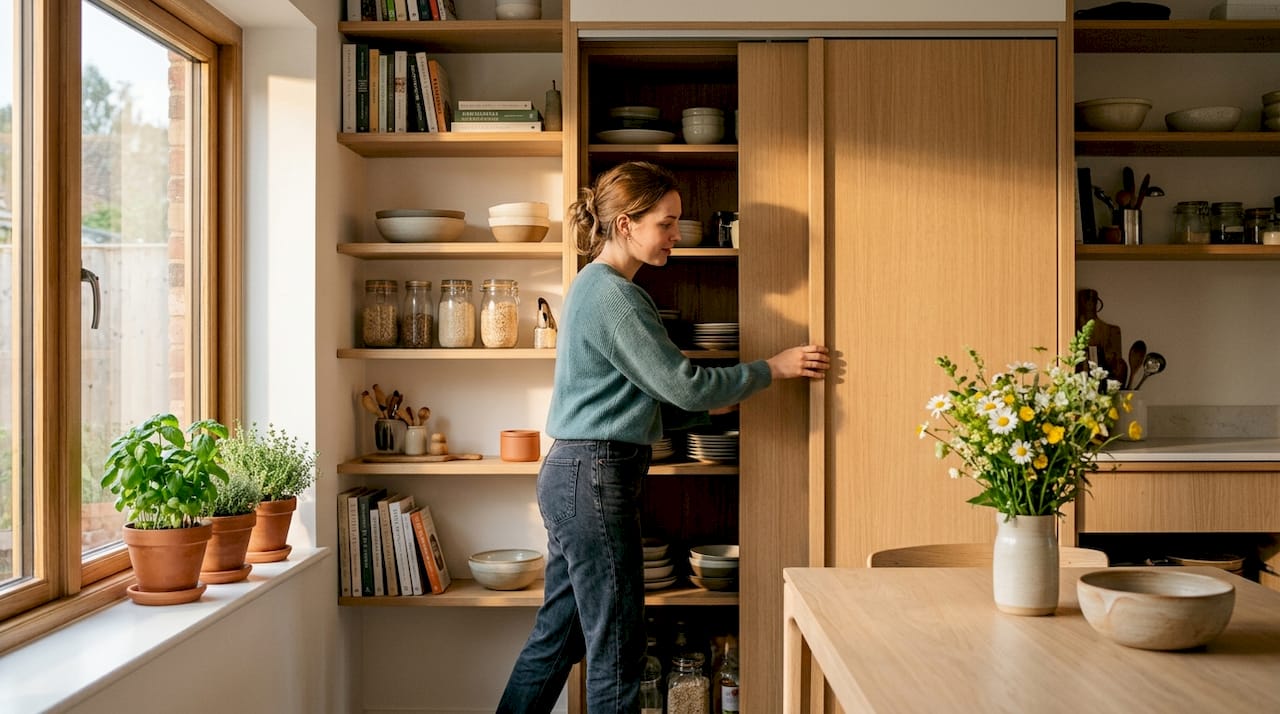
With considered planning and creative solutions, the storage you already have at home can be increased by 30–50% without knocking through a single wall. Gaining storage is not a demolition job but a rethinking of the space you already have. Multifunctional furniture and vertical storage, applied together, are the two methods that bring an immediately perceptible change in most city flats. For young families, urban homeowners and those building new, this article sets out the most effective steps, tools and design principles.
Which storage solutions add space most effectively in a small flat?
Multifunctional furniture is a small flat’s best ally. An ottoman bed provides a place to sleep and seasonal storage at once, a Murphy bed frees up the room’s entire floor area during the day, and a coffee table with storage tucks books, toys and small objects elegantly out of sight. These pieces reduce the number of items of furniture needed, so the room feels airier.
Vertical storage is the quickest way to free up floor area. Wall shelves, full-height cabinets and over-door shelving put to work the areas that most flats overlook entirely. A cabinet 240 cm tall stores twice as much on the same footprint as a 120 cm version.
Space-saving solutions in the kitchen and the bathroom count for a great deal too. A few specific options:
- A magnetic knife rack in the kitchen: it frees up a drawer, and is handsome as well as practical.
- Pockets fitted to the inside face of a door in the bathroom: ideal for haircare products and cleaning supplies.
- A trolley on castors beside the washing machine: easy to pull out, yet all but invisible.
- A corner shelf next to the shower: it uses the corner area, where nothing else would fit.
- A wall-mounted spice rack above the kitchen splashback: it leaves the worktop clear.
How do you plan a storage system deliberately?
Planning a storage system begins with zoning. According to the principle of zoning, objects should be placed according to how often they are used: the things you reach for daily should be close at hand, the weekly ones a little further away, and the seasonal pieces on the highest shelves or under the bed. This approach prevents the most important items from staying buried behind the ones you rarely touch.
Labelling and colour coding are indispensable to keeping the system alive. With child-friendly icons and simple pictograms, even preschool-age children can find their place within it. This not only maintains order, it also builds the children’s independence.
The steps of building a considered storage system:
- Take an inventory: write down what you store and how often you use it.
- Mark out the zones: define the daily, weekly and seasonal zones in every room.
- Map the dead space: look for the areas going unused – under the bed, above doors, in the corners.
- Choose the storage: pick boxes and baskets of a consistent size that nest together.
- Label and organise: put a label or an icon on every storage unit.
- Review regularly: every quarter, go through what has become superfluous and clear it out of the system.
Which tools and steps help you gain storage?
A combination of shelving systems, wall-mounted systems and storage boxes gives the best result. A single method is rarely enough on its own, but applied together these tools form a legible and sustainable system.
Shelving systems and cabinets
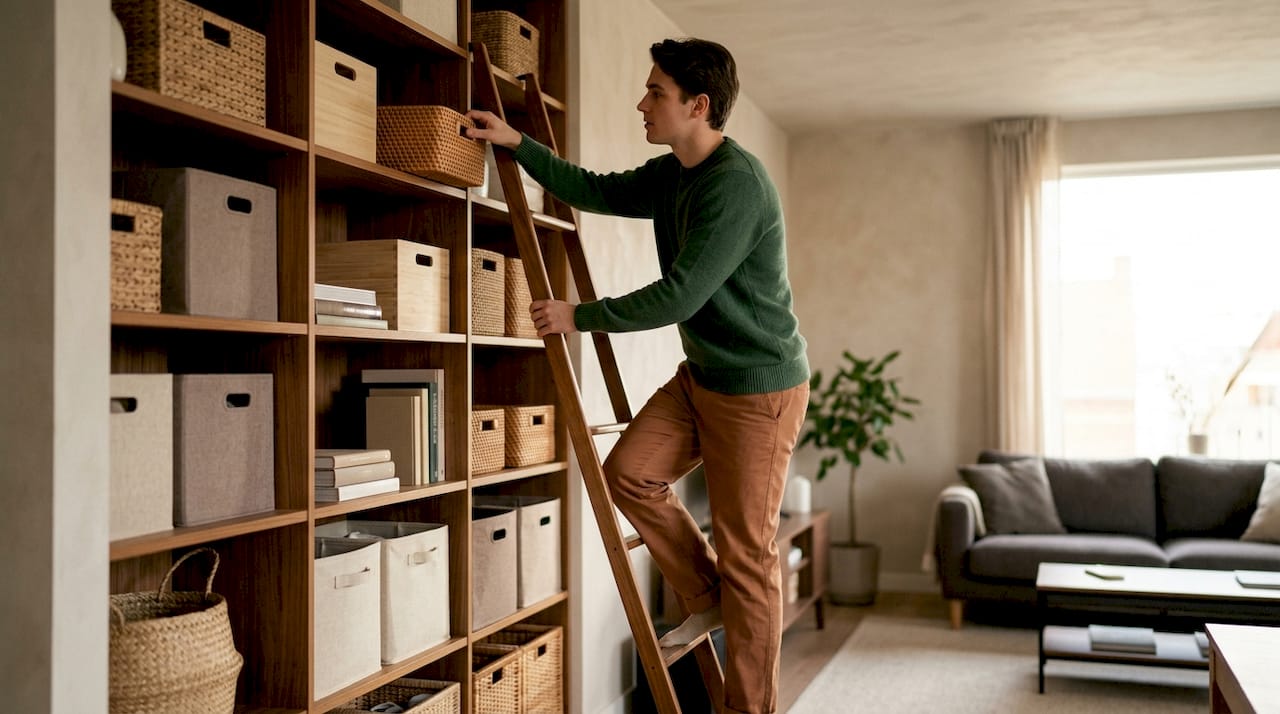
A full-height cabinet is one of the best investments in a small flat. A corner shelf makes use of the area where conventional furniture will not fit. Modular shelving has the advantage of being extendable and rearrangeable as needs change. Built-in furniture tailors every centimetre to the particular flat, which over the long term counts as a value-adding investment.
Storage boxes and baskets
Transparent storage boxes show their contents at once, so there is no need to open every one of them. Fabric baskets bring a softer look and fold flat when they are empty. Trolleys on castors are especially useful in the kitchen, the bathroom and the garage, because they are easy to move.
| Storage item | Best used for | Advantage |
|---|---|---|
| Transparent lidded box | Seasonal clothes, toys | Contents visible at a glance |
| Fabric basket | Living room, children’s room | Attractive, folds flat |
| Trolley on castors | Kitchen, bathroom | Easy to move |
| Full-height cabinet | Bedroom, hallway | Maximum vertical use |
| Corner shelf | Kitchen, bathroom | Dead space put to work |
DIY solutions and weekend projects
A ladder mounted on the wall as shelving, old crates as shelves or seating, PVC pipes as a bike rack: these DIY solutions are cheap and quick to put together. The essential thing is that every solution should suit the style of the home – otherwise the storage grows, but the visual order falls apart.
Which mistakes stand in the way of gaining storage?
The most common mistake is to concentrate solely on the floor area. Making use of the vertical surfaces and the dead space matters at least as much as the arrangement of the furniture on the floor. Anyone who thinks only horizontally is using less than half the space available.
Overcrowding is not only visually oppressive, it is mentally taxing as well. Research shows that a disordered environment raises stress levels and reduces concentration. Gaining storage does not mean accumulating more things; it means finding the best place for the things you already own.
The most common mistakes to avoid:
- Storage in the wrong size: small objects end up in oversized boxes, where they get lost.
- No system within the system: without a consistent logic, everyone puts things back somewhere different.
- Ignoring the design: the style of the storage does not match the overall look of the home.
- No regular upkeep: a storage system fills up with superfluous objects over time if it is never reviewed.
- Neglecting dead space: the areas above the doors, under the bed and in the corners stay unused.
“The essence of smart storage is awareness and making the most of what the space already offers, not necessarily buying expensive equipment. Regular upkeep and periodic review are what keep a storage system working over the long term.”
Key takeaways
Gaining storage is first and foremost a question of considered planning: vertical space, dead space and multifunctional furniture, applied together, yield 30–50% more storage capacity without any extension.
| Point | Details |
|---|---|
| Vertical storage | Full-height cabinets and wall shelves double the storage capacity on the same footprint. |
| Multifunctional furniture | An ottoman bed and a Murphy bed answer the need to sleep and the need to store at once. |
| Zoning | Setting up daily, weekly and seasonal zones stops disorder from taking hold. |
| Using dead space | Deliberate use of the space under the bed, above the doors and in the corners adds significant capacity. |
| Regular review | A quarterly look through keeps the storage system legible and usable over the long term. |
The InteriorVibe view: why “more space” thinking is not enough
Over the years we have redesigned a great many flats, and we have always found the same thing: clients ask for more space first, when what they actually need is a better system. That distinction fundamentally determines whether the result really works.
The most common misconception is that a larger flat solves the storage problem. It does not. Anyone who stores things haphazardly in a small flat will store them just as haphazardly in a large one. The size of the space is secondary; the quality of the planning comes first.
We also see that aesthetics and function are not enemies. A well-designed built-in wardrobe looks better than a haphazardly loaded run of shelves, and it stores twice as much at the same time. Interior architectural design creates precisely this balance: behind every decision there is a measurable functional reason, not merely taste.
The advice I give every one of our clients is this: start with the inventory, not the shopping. Find out what you are storing before you decide how to store it. It is the single step that stops you standing in exactly the same place six months from now.
— InteriorVibe Studio
InteriorVibe Studio can help when the space is not enough
InteriorVibe Studio is an interior architecture practice that designs for people who do not want to compromise between function and style. When planning bespoke storage systems we take every centimetre into account: from the opening direction of the doors to the height of the ceiling. The result is a home in which everything has its place, and which still feels spacious and ordered.
Browsing InteriorVibe’s portfolio, you can see how cramped, crowded spaces turn into functional and beautiful homes. If you would like to know how we could help in your own home, take a look at our approach and get in touch.
Frequently Asked Questions
How much more storage capacity can planning deliver?
Rethinking the space deliberately can yield up to 50% more storage capacity without any extension. That increase comes mainly from making use of the vertical surfaces and the dead space.
Which furniture is best for storage in a small flat?
The ottoman bed and the Murphy bed are the two most effective solutions, because each fulfils two functions at once. A coffee table with storage is likewise an excellent choice for a living room.
How do you keep a storage system in order?
Regular quarterly review and consistently putting things back are what maintain order. With labelling and colour coding, everyone – children included – learns the system easily.
Is it worth involving a professional in planning a storage system?
Yes, particularly in the case of built-in furniture. Interior architectural design guarantees that every centimetre is tailored to the particular flat, which is a value-adding investment over the long term.
How do you use the space under the bed effectively?
Flat storage boxes on castors are the ones to use, ideally with a transparent lid. Under-bed storage is best suited to seasonal clothes, bed linen and rarely used items.