
Japandi style: the five materials that make it japandi
Japandi style through a designer’s eyes: the five materials behind its character, what a japandi kitchen and bedroom look like, and where japandi goes wrong.
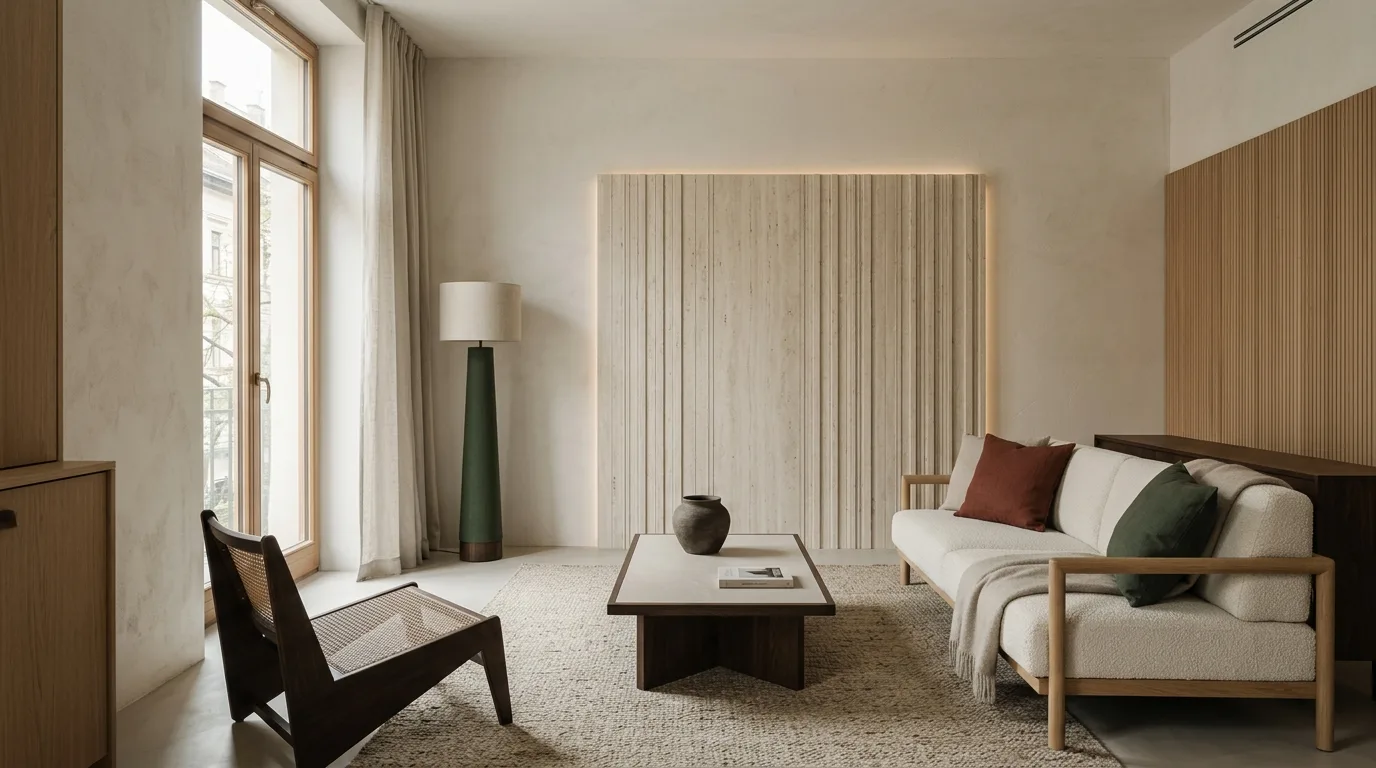
Japandi style is neither Japanese nor Scandinavian. It is the intersection of the two: from the lightness of the Scandinavian and the restraint of the Japanese, what remains is what both have in common — that nothing shouts.
And because it is not a form but an attitude, it can be grasped through materials. Five materials give it its character. If those five are there, it will be japandi even without a single Japanese object in the flat.
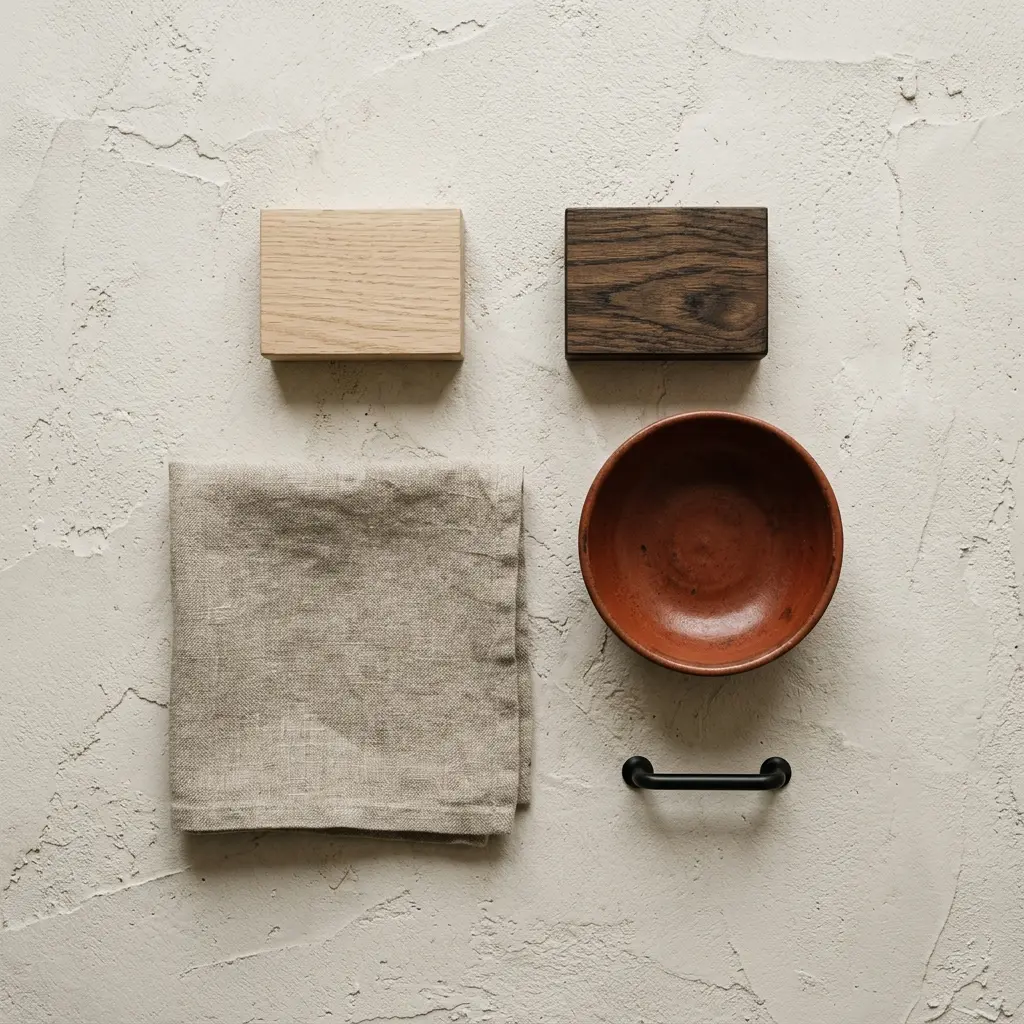
1 · Pale, matt timber
Oak, ash, maple — raw or with a whitened oil. Japandi timber is neither glossy nor yellow. Lacquered, honey-coloured beech is what instantly places a room in the 2000s.
The second timber is the full stop: walnut or smoked oak, on a small area. A tabletop, a run of shelves. The pale timber is the air, the dark timber is the punctuation mark.
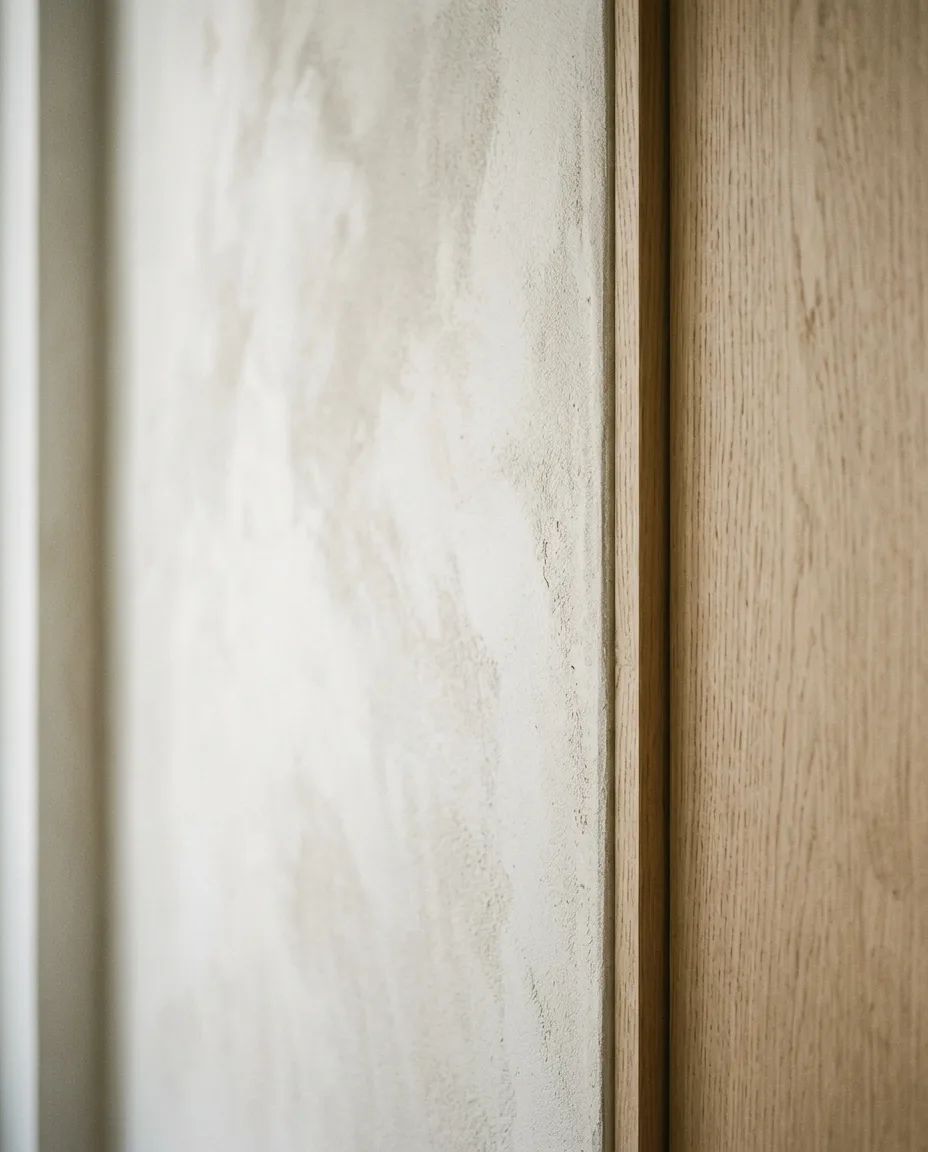
2 · Limewashed or plastered walls
Not paint. It has texture. Lime plaster, clay plaster or a matt paint with a tactile surface — something over which the light moves softly. That is what keeps an off-white wall from feeling clinical.
If you want to carry the same feeling into the bathroom, microcement is its relative: the same matt, hand-applied, grout-free logic.
3 · Linen and wool
In a japandi room textiles do not decorate, they absorb sound and light. Linen curtains, a wool rug, washed cotton bedding. None of them glossy, none of them patterned.
The japandi bedroom starts here: the bedding is the largest textile surface in the home, so it sets the tone of the room.
4 · Stone, ceramic, clay
A stone basin, a ceramic vase, a clay bowl. Few objects, every one of them hand-formed, not perfect. This is the wabi-sabi part of the formula: an irregular edge is not a fault but the only thing that reveals a human being made it.
This is the point at which japandi style most easily goes wrong: if the handmade pieces turn into a collection, the room becomes cluttered. Three objects on a shelf, not twelve.
5 · Blackened metal
Not chrome, not polished brass. Matt black or blackened steel, in slim profiles: a light fitting, a handle, a shelf bracket. It is the one contrasting element of the style, and precisely for that reason it should be used sparingly.
If there is bronze or brass in the home as well, choose one. The two together fall apart.
The japandi kitchen
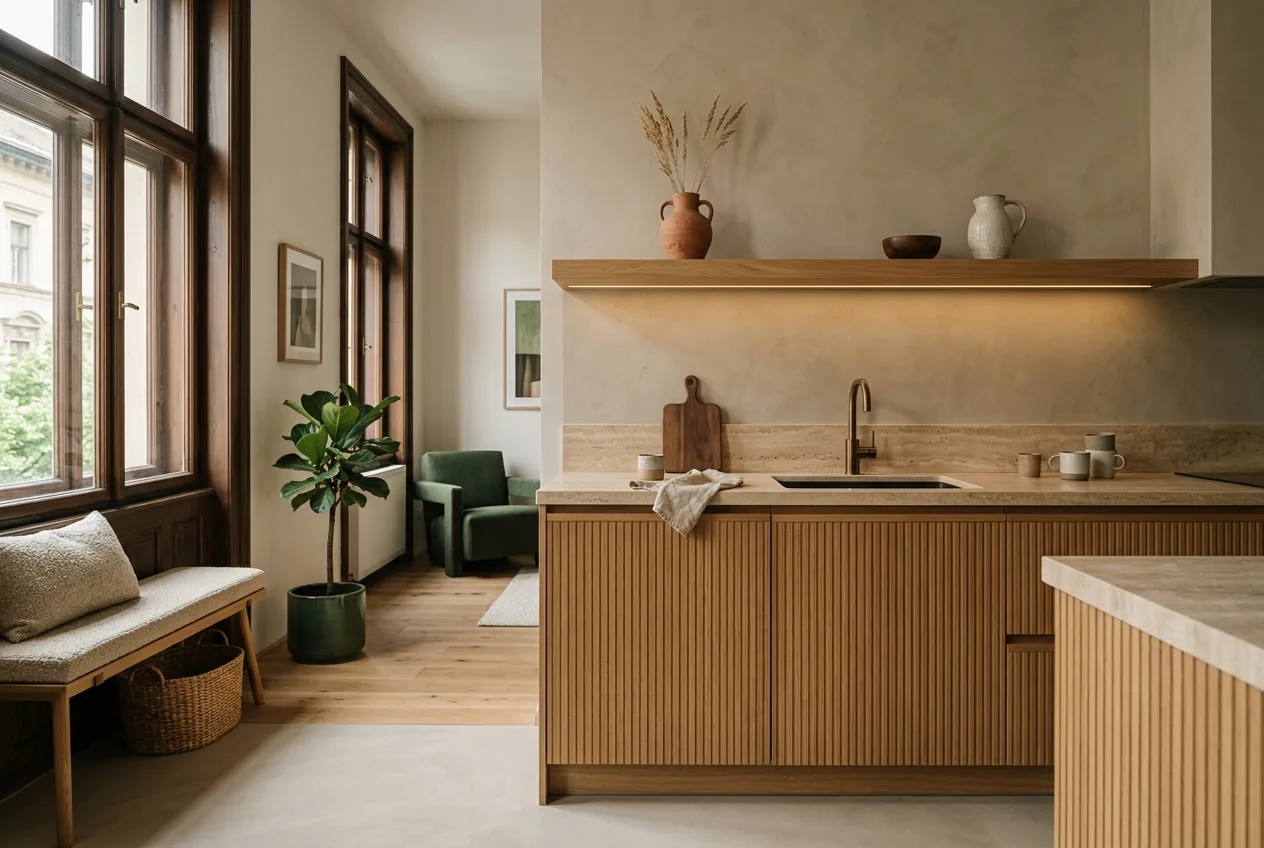
The japandi kitchen differs from the Scandinavian one in two respects: handleless fronts, and a single visible change of material. Pale oak below, the same tone above — or no wall units at all, just an empty wall.
Appliances are not ornaments. Anything that cannot be integrated should go behind a sliding door. If the kitchen is visible from the living room as well, this decision determines the calm of the whole space.
The japandi bedroom
A low bed, a large empty wall above it — or a single panel of fluted timber panelling. Asymmetric rather than symmetric bedside tables on either side. Lighting below eye level.
The japandi bedroom works when it is good in the evening too. Under a single ceiling light every style falls apart.
Where japandi goes wrong
When the timber is yellow. A honey-coloured, lacquered surface instantly moves the room into another decade.
When everything is symmetrical. The essence of the Japanese approach is asymmetry. Two identical bedside tables with two identical lamps — that is Scandinavian, not japandi.
When it is full. Japandi does not mean few objects, it means few kinds of object. Fifty books is fine. Fifty different ornaments is not.
When the light is cold. Above 4000 kelvin an off-white wall turns grey and timber goes lifeless. In a japandi room 2700 kelvin is the ceiling.
Frequently asked questions
What is the difference between japandi and Scandinavian style?
Scandinavian is lighter, more playful, with more colour and pattern. Japandi is more restrained, with darker contrasts and asymmetry. In practice, japandi is where dark timber and handmade ceramics join the Scandinavian furniture — and the gallery wall comes off the white wall.
Does japandi work in a small flat?
Particularly well, because the essence of the style is reducing visual noise. In a small flat, built-in, handleless storage and a single consistent wall colour give more than any mirror.
Which colours suit japandi?
Off-white, sand and warm greyish beige as a base, with one deep tone: forest green, smoky blue or charcoal. Keep the accent small — the 60–30–10 ratio applies here quite literally.
Can there be a deep, dark tone in a japandi room?
Yes — but only on a matt, textured surface, and together with the ceiling. Japandi is not japandi because it is light, but because there is no sharp contrast in it. There is more on the proportion of tones in our article on building a colour palette.
If this sounds familiar — that you want the calm but do not know where the palette should start — see how we work, or the Organic Luxury project.
Next read: Timber wall panelling and slats: why they make a room look larger